

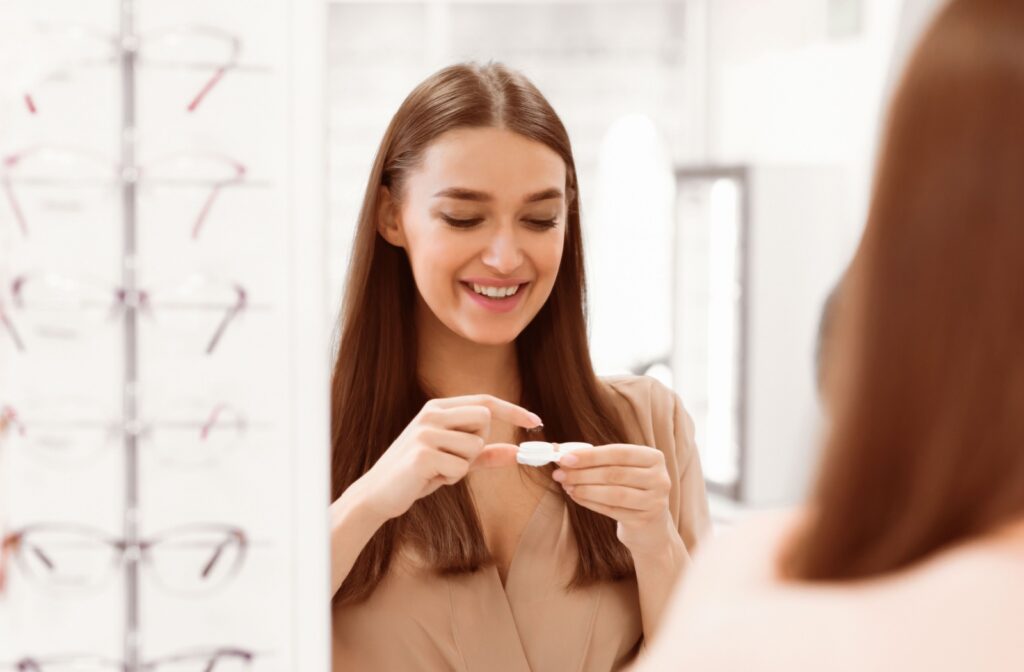
Many people consider switching from glasses to contact lenses for a new look or more freedom during activities. You yourself might be wondering if contacts are a good choice for your eyes and your lifestyle.
Being able to safely wear contact lenses depends on several factors, from your eye health and prescription to your daily habits. Fortunately, modern technology has made it possible for more people than ever to wear contact lenses.
Who Is a Good Candidate for Contact Lenses?
Many people who need vision correction can wear contact lenses without issues. Modern materials and designs have made contacts increasingly comfortable, breathable, and effective for a wide range of prescriptions.
A comprehensive eye exam is the first step to find out if you’re a good fit.
Common Vision Problems Contacts Correct
Contact lenses are designed to address the most common refractive errors. They work by focusing light directly on your retina to provide clear vision. These common conditions include:
- Nearsightedness (Myopia)—You can see objects up close clearly, but distant objects appear blurry.
- Farsightedness (Hyperopia)—You may see distant objects clearly, but things up close are out of focus.
- Astigmatism—This causes blurry vision at all distances due to an irregular shape of the cornea or lens.
- Age-related farsightedness (Presbyopia)—As you get older, the lenses of your eyes become less flexible, making it difficult to focus on close-up text.
Who May Need to Avoid Contact Lenses?
While contacts are a great option for many people, they’re not for everyone. Certain conditions can make wearing them uncomfortable or even risky for your eye health. It’s important to discuss your full health history with a professional to make an informed choice.
Specific Eye Conditions
Some eye-related issues can interfere with successful contact lens use. These can include:
- Frequent eye infections like conjunctivitis
- Severe dry eye
- Eye-related allergies
- Blepharitis—inflammation of the eyelids
Lifestyle & Environmental Factors
Your daily environment and activities also play a role in whether contacts are a practical choice. If you work in a dusty place—like a construction site or woodshop—debris can get trapped under the lens and irritate your eye. As your eye doctor in Long Beach, we can help you weigh these factors and find a solution that fits your life.
The Contact Lens Exam & Fitting Process
Getting contact lenses involves more than a standard eye exam for glasses. A contact lens exam and fitting are necessary to find lenses that fit your eyes correctly and comfortably. This extra step helps protect the health of your eyes.
What to Expect at Your Appointment
During a fitting, your optometrist will take measurements of your eyes. This includes the curvature of your cornea, which can be mapped with a technique called corneal topography to determine the proper lens base curve and diameter. These details help us find a lens that fits well and allows enough oxygen to reach your cornea.
A Trial Period Is Key
You’ll likely receive a pair of trial lenses to wear for a week or so. This allows you to see how they feel and perform in your daily life. A follow-up visit lets your doctor check the fit and your vision before you order a full supply.
Contact Lenses at Different Ages
People’s vision needs change with age, and contact lens options have evolved to meet these expectations. From active children to adults who need multifocal options, there are choices available for nearly every age group. The right lens is about matching technology to your current needs.
Contacts For Children & Teens
Age is less of a factor than responsibility when it comes to contact lenses for younger people. After a children’s eye exam, your optometrist can help determine whether your child is ready to wear and care for contact lenses. The decision often comes down to a child’s ability to handle their lenses hygienically and follow a consistent care routine.
Contacts For Adults & Seniors
As you get older, you might develop conditions like presbyopia or dry eyes that can affect comfort. Multifocal contact lenses can help you see clearly at all distances. Your eye doctor can also recommend lenses with high water content or materials designed to help with dryness.
Daily Care & Common Questions
Proper care is a cornerstone of keeping your eyes healthy while you wear contact lenses. Following a few simple rules can prevent discomfort and potential complications.
Insertion & Removal Challenges
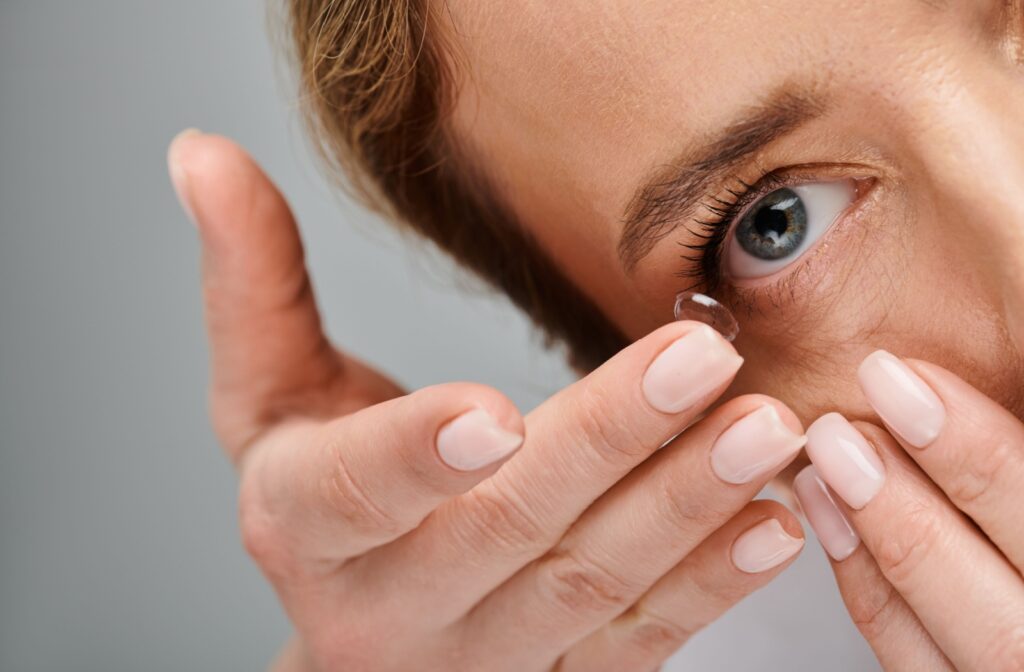
Putting contacts in and taking them out can seem tricky at first. It takes practice to get comfortable with the process. Most people develop a routine quickly and find that it becomes second nature.
Important Safety Habits
Simple habits can make a big difference in your contact lens experience. To protect your eyes and get the most out of your lenses, always remember a few key things:
- Never use tap water on your lenses
- Don’t shower or swim with contacts
- Wash and dry your hands thoroughly before you touch your lenses or eyes.
- Follow the replacement schedule your doctor gives you for disposable lenses.
- Adhering to proper contact lens care includes using fresh solution every time you store your lenses—never top off old solution.
Keep Your Vision Comfortable
The world of contact lenses is full of options, and finding the right one is a personal journey. Whether you’re a candidate for contact lenses depends on a mix of your eyes, health, and lifestyle. At Total Vision Long Beach, we can help you explore your choices and find a path to clear, comfortable vision.
Schedule a visit with us to discuss if contact lenses are right for you.