
Key Takeaways
- A diabetic eye exam looks for damage caused by blood sugar levels.
- This evaluation checks tiny blood vessels inside the eyes to help prevent vision loss.
- Your optometrist uses modern tools to look for specific health conditions.
- You might notice sudden blurriness or new floaters if you experience early eye problems.
- People with type 1 or type 2 diabetes should schedule regular visits with an eye doctor.
Eye Exams Help Protect Your Health
Living with diabetes means managing many different aspects of your health to stay active and comfortable. This includes your vision. You rely on clear sight to drive to work, read the morning news, and recognize the faces of your family members. However, high blood sugar can affect the tiny blood vessels in your eyes. This makes regular checkups a helpful part of your overall health routine.
Many people wonder how a diabetic eye exam differs from a standard vision check. A diabetic eye exam is a comprehensive evaluation that looks for changes in the blood vessels of your retina in order to help you manage your long-term vision health. Total Vision Long Beach focuses on the back of your eye rather than just updating your prescription for glasses. Catching small changes early helps our team support your ongoing eye health.
A Diabetic Eye Exam Explained
Focus on Retina Health
Your eyes rely on a tissue called the retina to capture light and send images to your brain. However, high blood sugar levels can damage the delicate blood vessels in this area. A diabetic evaluation examines the retina and other structures in your eye for signs of damage and fluid leaks. By monitoring your eye health, we can help you protect yourself from early vision loss related to diabetes.
Who Needs a Diabetic Eye Exam
People with type 1 or type 2 diabetes need regular evaluations to monitor their eye health. Women with diabetes who are planning for pregnancy will also likely need additional visits. This is because pregnancy hormones can affect blood vessels throughout the entire body.
Differences Between Regular & Diabetic Exams
The Main Focus
Regular visits check prescription needs for glasses so you can read and drive comfortably. Diabetic eye exams can include this part too, but they also check your retina and the blood vessels in the back of your eye for damage related to your blood sugar levels.
Your regular optometrist can perform a diabetic eye exam in the same office as usual. This allows you to ask questions and discuss your health history with a provider you already know.
Common Tests in Your Evaluation
Pupil Dilation
Your eye doctor needs a clear window into the back of your eye in order to see the blood vessels there. In many cases, this is accomplished by using special eye drops that widen your pupils and provide a clearer view of your retina. Pupil dilation leaves your vision blurry and your eyes sensitive to light for up to a few hours after your appointment.

Optical Coherence Tomography
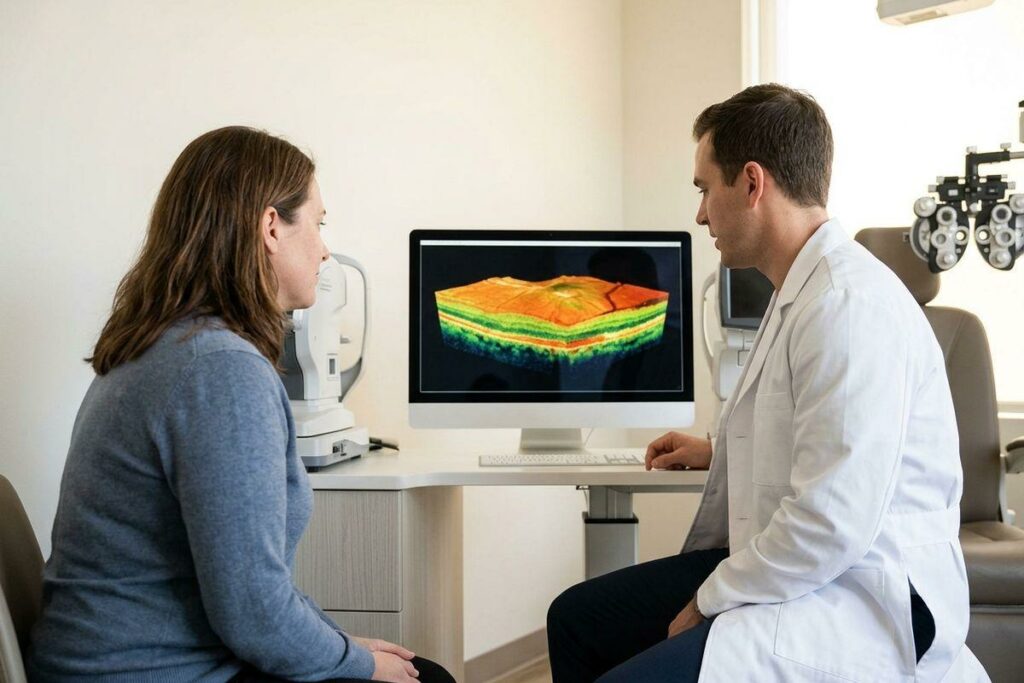
Technology makes it easier to track small changes in your eye health. Optical coherence tomography provides a cross section image of the retina. The scan takes just a few seconds and requires no physical contact with your eye.
This detailed view helps your care team spot fluid leaks that might need attention. Your eye doctor can review these images with you during your appointment.
Early Signs of Diabetic Eye Problems
Physical Symptoms
Your body often sends subtle signals when something changes in your eye health. You should always listen to your body and share these changes with your eye doctor. Pay attention to the following symptoms:
- Sudden blurriness or double vision might appear.
- New floaters or dark lines can float across your line of sight.
- Pressure or pain in the eyes requires a prompt evaluation.
When to Schedule Your Visit with an Eye Doctor in Long Beach
Timelines for Your Visit
Your eye exam timeline depends on when you received your diabetes diagnosis. Type 1 diabetes requires an evaluation within five years of your initial diagnosis. Type 2 diabetes needs an evaluation right away, because blood sugar changes might have started earlier.
Plan for one visit every year after that initial appointment. Finding an experienced eye doctor in Long Beach helps you build a comfortable routine for your annual care.
Our team at Total Vision Long Beach can help you monitor your retina health in a friendly and welcoming environment. Call our office to schedule your next appointment and keep your future vision clear.